
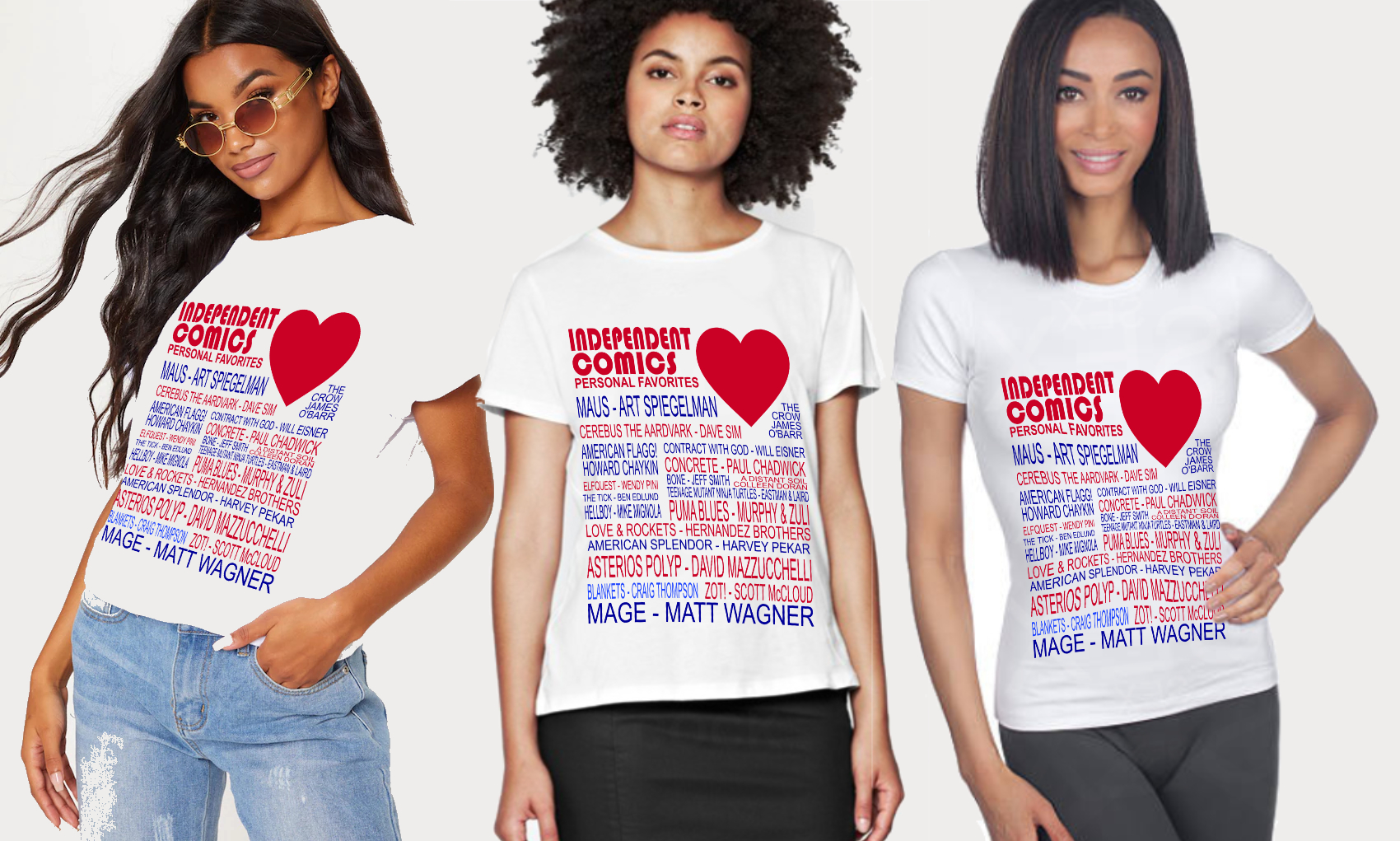

What's in a name? Newest test shirt promoting independent comic creators who paved the way
for a revolution in comic storytelling. Merch - T-Shirts by Billion Hero Studios | TeePublic
"Comics will break your heart kid." - Jack Kirby
Will wonders never cease? New production equipment and drop shipping have combined to create a revolution in Print On Demand products that could never have been foreseen by comic creators of old.
Jack Kirby has been quoted as saying that "Comics will break your heart." He worked and struggled inside a broken, corrupt system where the playing field was always tilted toward the big publishing houses. Artists could be easily blackballed, denied work or opportunities to advance. Publishers used their power of scale to crush artist studios and divide comics into replaceable tasks and used something called "work for hire" to grind freelancers into the ground. Innovation and creativity were not rewarded. Meeting impossible deadlines combined with low pay in a race to the bottom. How could any artform hope to survive?
Without countless individuals dreaming that comics could be an artform, no progress could ever be made. Will Eisner was a pioneer. Kirby, along with collaborator Joe SImon, also challenged the system. They dared to expand the boundaries of what comics could be, especially after the chill that the Comic Code Authority had on comic publishing.
What is painful to understand is how small and weak the comic industry has always been. While valuable IP first finds its way into the public sphere through the gateway of comics, untold billions have been earned on merchandising and licensing. Little of that wealth has trickled down to the creators who have found themselves out-matched and out-lawyered at every turn. Page rates for artists have been pretty much stagnant for decades. The industry itself continues to shrink while simultaneously film, merchandising, and "legitimate" booksellers profit. Graphic novels and trade paperback collections enjoy year after year of growth. Crowd funding for comic projects has also exploded in popularity - bringing projects directly to fans.
New genres seem to bubble up from the ground.
Still, despite an expansion of tools to produce comics and get them in front of fans, making a living in comics is next to impossible. Not too much has changed in the last few decades since Kirby and others fought the system. Fraud still exists. Artists are still exploited. Wages are still pushed down. After the recent death of a well-liked young cartoonist, a trend appeared on social media in the form of a hashtag - #ComicsBrokeMe. Hundreds of artists poured out their stories about getting ripped off by comic companies, having their artwork or IP stolen, and suffering long hours with no benefits or health insurance.
Artists have been conditioned over time to expect poor treatment. A wave of fresh young talent always threatens to wash away any advances artists can make working for established companies. Why should they pay higher wages or offer royalties when a hundred newcomers are eager to take the spots of established pros? Downward pressure.
Perhaps the biggest threat to the status quo came in the form of Image Comics. When the top talent at Marvel decided to quit working for the majors and strike out on their own in the 1990s, publishers scrambled to secure their remaining talent. Over time, however, the backlash has been severe. Deeply hurt by the exodus of top selling names, the big comic companies decided that they would no longer "promote" artists to "star" levels ever again. Writing was now emphasized. Comics became much more text heavy. Writers could easily be replaced. Art chores were increasingly being farmed out to workers in foreign countries.
There are two things to consider. First, as an artform, comics advances in fits and starts, often fueled by tremendously talented and ambitious individuals. The independents. The rebels. The rule breakers. Independent cartoonists with guts to navigate the labyrinth of corrupt publishing systems have always fought on the leading edge of innovation in comic publishing. They told new kinds of stories, in new ways, for new audiences. When everyone said "it can't be done," they sharpened their pencils, stirred their ink, and dug in. They pioneered new techniques, new attitudes, and new directions.
Who can forget the "grim and gritty" comics being produced after Frank Miller and Alan Moore kicked the doors in?
Secondly, money. The economics of publishing comics is still a crap shoot. The margins are slim, and the lead time is too great with little guarantee of reward at the end. The books themselves only make money if they come out on time or shatter sales benchmarks. It is really in the merchandising and licensing that the real money gets made, has ever been made. Selling individual copies will never get it done. Shirts, stickers, lunch boxes, pajamas, games, toys, cartoons, TV shows, and movies all rake in the money that sales of books never can.
What should keep publishers up at night...
...is the fact that a small handful of people, with the help of digital equipment, social media, and crowdfunding, can produce professional-level stories that are basically indistinguishable from works only able to be produced until recently on big presses, through big distributors, at big companies. Comics have oozed out of the panel shapes corporations have wanted to continue placing them in. Storytelling has become more democratized and decentralized. Creators are finding their own audiences and cutting out the middleman. It is happening right before our eyes. As Disney stoops to gobble up all the entertainment IP on the planet, the grass roots are finding a way. This should scare the crap out of executives.
At the top of the blog, you will see a sample of a test shirt. It is being produced using readily available POD services. The names on the shirt represent a tiny handful of troublemakers, stubborn idealists, and dreamers. There are countless others. They dedicated their time, effort, and energy to the idea that comics could be an artform, if given a chance.
Consider who you want to support in the struggle for artistic expression. Vote with your dollars. Take some risks with what you consume. Buy some oddball comics, some unique stories, and be open to the idea that changing the system is as easy as changing our minds.
Persist!
RICK
Billion Hero Studios
The Power of Storytelling
If you love storytelling, be involved, engaged, and informed.
Subscribe to this blog to receive notifications (so you never miss a post!).
Share your favorite posts with like-minded creatives.
Comment and ask questions or make requests.
Share your favorite posts with like-minded creatives.
Comment and ask questions or make requests.
Sign-Up for the unofficial Billion Hero Studios Newsletter by sending an email with the word "Newsletter" in the subject line to: billionherostudios@gmail.com
Thank you for visiting, participating, and collaborating in the storytelling experience.
Thank you for visiting, participating, and collaborating in the storytelling experience.


